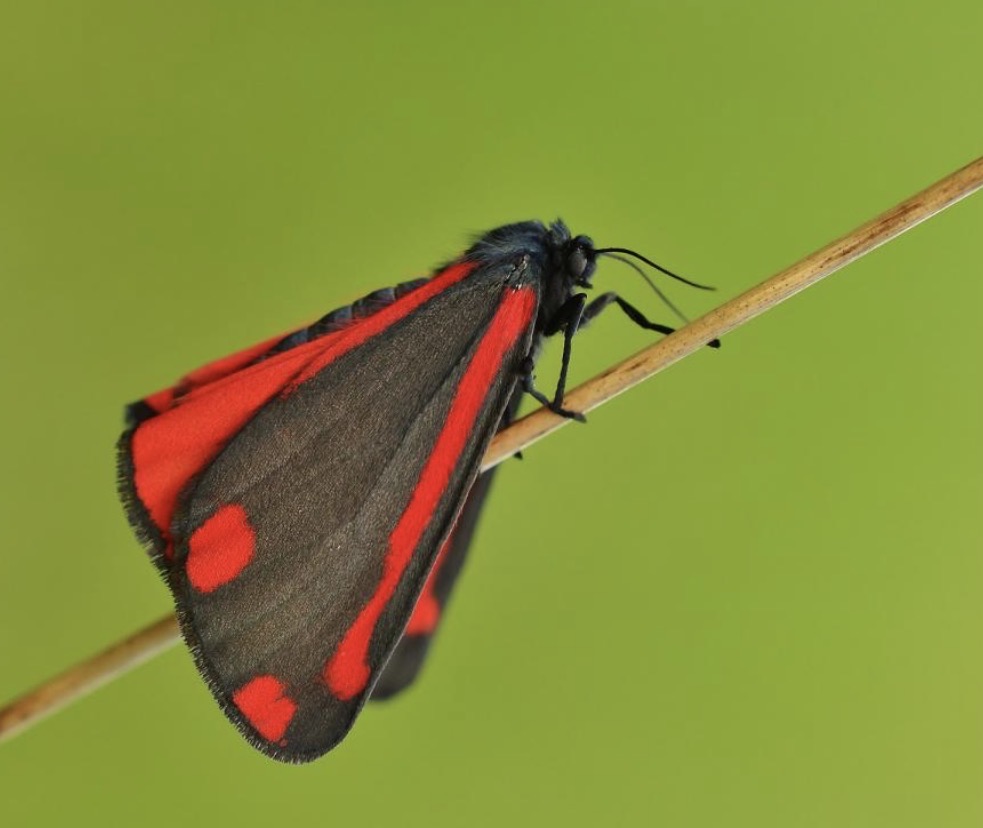
I just disturbed an insect in my garden, prompting it to fly around a bit. It looked red in flight. It flew like a lepidoptera species, but we don’t have any red butterflies so I figured it must be a moth. Then I saw it still on a leaf, and immediately recognised it as a…Continue Reading “Cinnabar Moth – 60th species for the Moths Project”
“We want to show that a garden can be attractive and also wildlife friendly.” In April, eight members of the WGG visited Bell House Garden in Dulwich. Co-ordinator Czech Conroy reports. We were shown round by their three senior volunteer gardeners. We were impressed by the wide range of habitats in the garden, and by…Continue Reading “WGG visit to Bell House Garden, Dulwich”
At the end of March, the Group visited the JAGS Botany Garden. The botany garden has been in existence since 1896, when Lilian Clarke, a botany teacher, created various habitats (sand dunes, shingle beaches, salt marshes, tiny forests). It struck us as pioneering work, far ahead of its time. The site has been through various…Continue Reading “WGG visit to JAGS Botany Garden”
At the AGM in March, Wildlife Gardening Group Co-ordinator Czech Conroy gave a brief talk on the work of the group and why we believe wildlife gardening is so important. Globally, nationally and locally we are experiencing a biodiversity crisis. Species are becoming extinct at a rapid rate in many parts of the world, and…Continue Reading “Wildlife Gardening Group at the AGM”
The beautiful Early Grey moth – in a Lambeth garden . “I put out the moth trap last night [23 March] and this was the only moth in it this morning. It’s appropriately named the Early Grey, and is on the wing from March to May. It’s another new one for our project list. They’re…Continue Reading “The Moths Project – March Update”